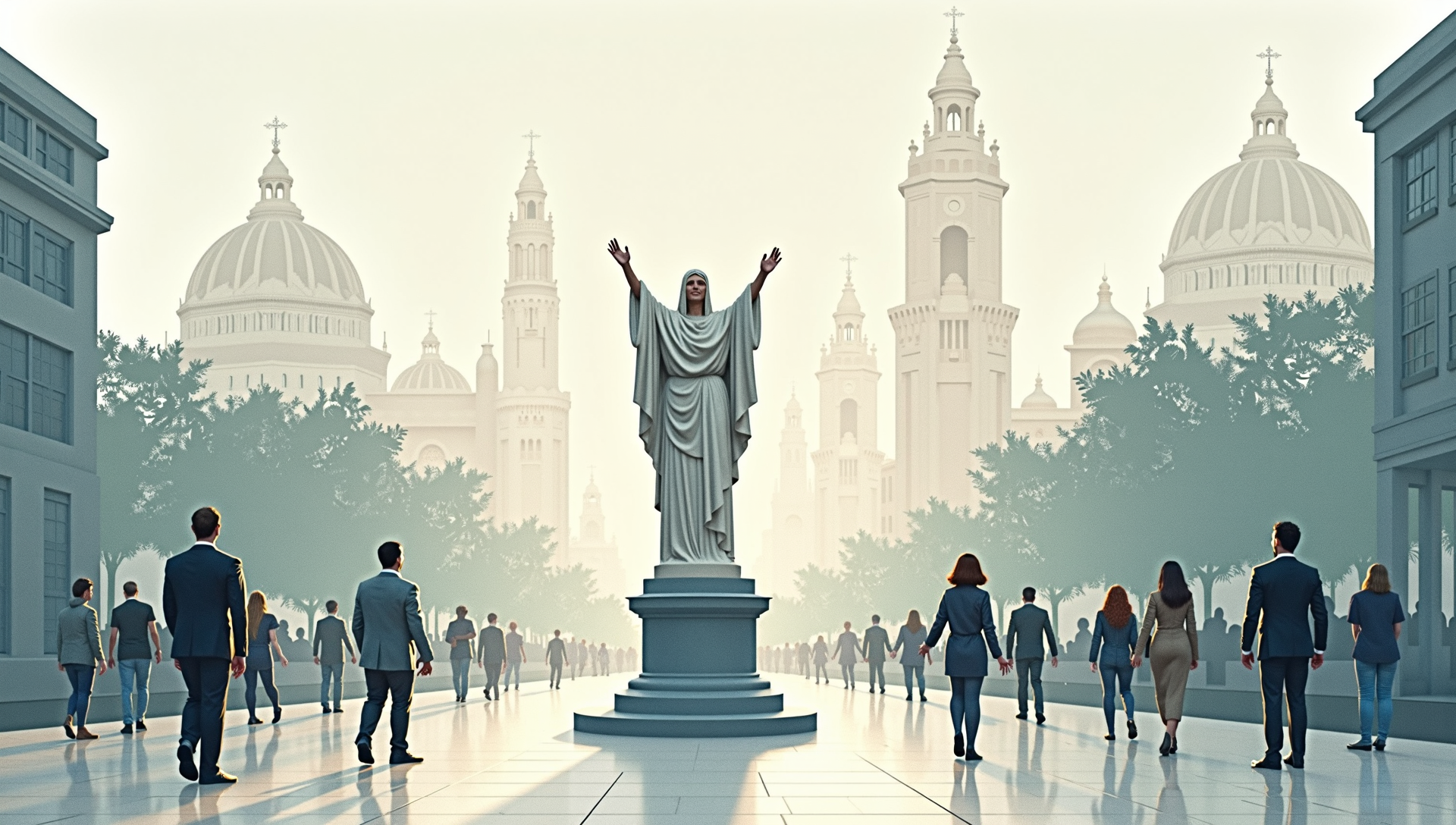
Introduction
Across much of the modern world, religion is navigating a new reality: life within societies that are becoming steadily more secularized. While faith remains deeply meaningful for millions, its public influence, institutional presence, and cultural authority have diminished in many contexts. This shift raises important questions about the evolving role of religion in social life, identity, and public discourse.
What Does Secularization Mean Today?
Secularization does not necessarily imply the disappearance of religion. Rather, it refers to:
- A decline in institutional religious authority
- Reduced participation in organized religious practices
- The separation of religious belief from state and public institutions
- Greater diversity of worldviews in public life
In secularized societies, religion becomes one voice among many rather than the dominant cultural framework.

Religion’s Changing Public Role
In the past, religious institutions often shaped laws, moral norms, and community life. Today, their role is more limited and contested. Public policy is increasingly guided by secular principles, while religion is encouraged to remain within the private sphere.
This shift has led to:
- Reduced visibility of religion in public institutions
- Debates over religious symbols in shared spaces
- New boundaries between faith and governance
Yet religion continues to influence culture through values, ethics, and social engagement.
Private Faith in a Publicly Secular World
Even as public religiosity declines, many individuals maintain personal forms of belief and spirituality. Surveys show that:
- Belief in God or a higher power remains common
- Personal prayer and reflection persist
- Spiritual identity often exists outside formal institutions
This points to a transformation rather than an extinction of religious life.

Challenges for Religious Institutions
Religious organizations face significant challenges in secularized societies, including:
- Declining attendance and membership
- Reduced influence among younger generations
- Financial and leadership pressures
- The need to communicate faith in culturally relevant ways
In response, many institutions are rethinking how they engage with communities, emphasizing service, dialogue, and social relevance.
Religion and Pluralism
Secularization often coincides with increased religious and cultural pluralism. This diversity encourages:
- Interfaith dialogue
- Greater tolerance of differing beliefs
- Legal frameworks that protect freedom of religion
At the same time, pluralism requires negotiation and respect, as religious perspectives coexist with secular and non-religious worldviews.

Why Religion Still Matters
Even in secular societies, religion continues to play a meaningful role by:
- Providing moral and ethical reflection
- Offering community and social support
- Inspiring charitable and humanitarian action
- Helping individuals navigate questions of meaning and purpose
Its influence may be quieter, but it remains significant.
Conclusion
Religion in an increasingly secularized society is not disappearing—it is adapting. As institutional authority declines, personal belief and spiritual exploration persist in new forms. Understanding this transformation is essential for navigating coexistence, dialogue, and shared values in modern pluralistic societies.