Introduction
In recent years, political controversy surrounding religious rights, particularly those affecting Muslim communities, has intensified across many democratic societies. Debates over immigration, national security, cultural integration, and religious expression have placed Islam at the center of public discourse—often in ways that blur the line between policy concerns and religious discrimination.
These tensions raise fundamental questions about how pluralistic societies protect religious freedom while navigating political fear, polarization, and identity politics.
Muslims and Religious Freedom in the Public Sphere
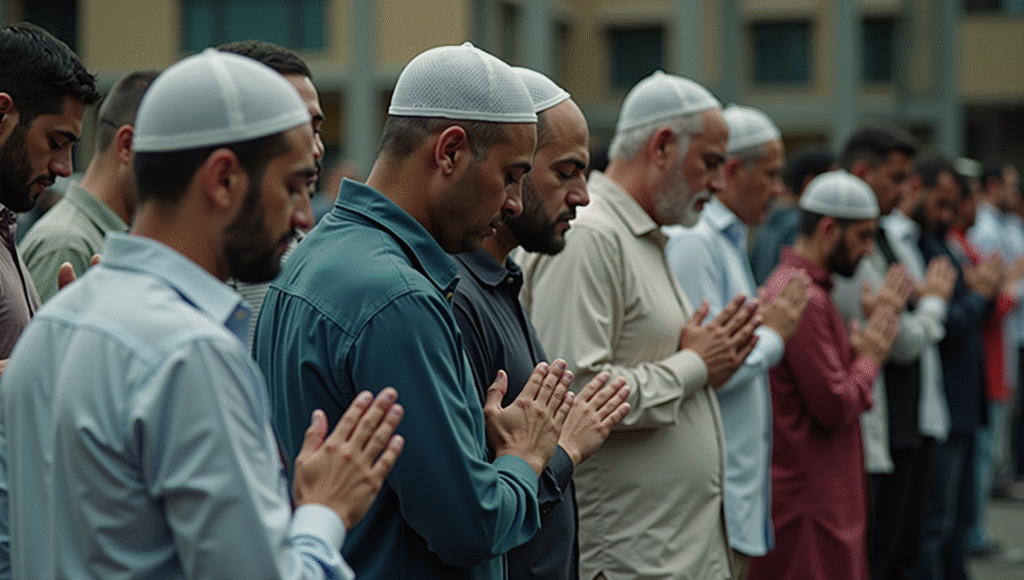
Religious freedom guarantees the right to practice faith without fear or exclusion. For Muslim communities, this includes:
- Wearing religious attire such as hijabs
- Observing prayer and fasting practices
- Building mosques and community centers
- Expressing religious identity openly
Yet these practices are frequently politicized, framed not as expressions of faith but as symbols of cultural or political threat.
Political Rhetoric and Public Perception
Political discourse plays a powerful role in shaping how religious minorities are perceived. In some cases, Muslim communities have been:
- Associated with extremism through broad generalizations
- Targeted by restrictive immigration or surveillance policies
- Subjected to public suspicion and misinformation
Such narratives contribute to Islamophobia, reinforcing fear rather than understanding, and often translate into real-world consequences.
Civil Rights and Legal Protections
In the United States and other democracies, constitutional and legal frameworks prohibit discrimination based on religion. However, enforcement and interpretation can become contested when political priorities intervene.
Key civil rights issues affecting Muslims include:
- Employment discrimination
- Religious accommodation in schools and workplaces
- Law enforcement profiling
- Equal access to public services
Legal protections exist, but their application often depends on political will and judicial interpretation.

National Security vs. Religious Liberty
One of the most sensitive areas of controversy involves the balance between national security and religious freedom. Policies justified on security grounds can disproportionately affect Muslim populations, leading to:
- Travel restrictions
- Increased surveillance
- Community mistrust
While security is a legitimate concern, critics argue that policies targeting specific religious groups undermine democratic values and fuel alienation.
The Impact on Social Cohesion
When religious rights are politicized, the broader society is affected. Marginalizing Muslim communities can result in:
- Social fragmentation
- Decreased civic participation
- Loss of trust in public institutions
- Intergenerational alienation
Conversely, inclusive approaches strengthen democratic resilience and mutual respect.

Toward Inclusion and Equal Protection
Addressing these controversies requires:
- Responsible political leadership
- Clear enforcement of civil rights laws
- Public education to counter misinformation
- Dialogue between religious communities and policymakers
Pluralistic societies function best when religious identity is protected rather than politicized.
Conclusion
The political controversies surrounding Muslim religious rights are not merely about one community—they reflect the broader challenge of upholding freedom and equality in diverse societies. Protecting the rights of Muslims strengthens democratic principles for everyone, reaffirming that religious liberty is not selective, but universal.